600_edited.png)
Navigating Graduate School as an International Student and Parent: Dr. Andrea’s Journey into Applied Policy Research

Updated: May 17
Many students interested in research and advanced degrees wonder whether an academic path or PhD will distance them from work where they can make a real impact on the communities they care about. Dr. Andrea is a great example of how one can thread the needle to do research that shapes social change and empowers disadvantaged communities.

Trained in economics and public policy in Colombia and the United States, Dr. Andrea brings advanced skills in social science research methodologies, participatory governance and action research, and community‑centered policy evaluation specializing in labor and immigration.
Beyond her broad research acumen and applied work across academic, government, and community spheres, Dr. Andrea has lived insight into navigating graduate school as an international student, translating work for diverse audiences, and balancing advanced degree pursuits while raising young children. While those skills might not land on one’s résumé or CV, in this interview - part of our Meet the Mentors series - she shares how these experiences give her pride and shape her work and mentorship practice. In her work with Another Degree, Dr. Andrea supports learners exploring a range of graduate school pathways. She offers PhD admissions consulting, and for those who aren’t sure a doctorate is the right next step, she provides graduate school admissions guidance that considers a wide range of routes, including applied economics or social science master’s, advanced degrees in public administration and policy, or international development programs. She is familiar with both U.S. and Latin American higher education systems, understands the international graduate student experience and transition into U.S. PhD programs, and offers meetings and workshops in fluent English or Spanish. For students already in graduate degree programs, her Research and Dissertation Coaching is especially well‑suited for those pursuing quantitative or applied social science research. She can provide training and support for Stata, R, Python, and other data analysis programs; help learners identify publicly available datasets aligned with their interests; and guide scholars in designing feasible, multi‑step research projects suitable for a capstone, thesis, or dissertation. You can also find her teaching coming soon on our YouTube channel, including an R for Beginners workshop.
For graduate students or recent advanced‑degree holders preparing for the job market or a career pivot, Dr. Andrea's Career Advising for Graduate Students will help learners identify their skills, gain clarity on their goals, and market themselves for academic and alternative‑academic (Alt‑Ac) pathways.
We’re fortunate to have Dr. Andrea as a featured speaker in the Another Degree at UCLA Careers in Research panel on Monday, May 18. Follow @anotherdegree on YouTube for the video after the event.
For institutions, reach out to Another Degree to collaborate on programs and applied learning opportunities featuring Dr. Andrea and other exceptional mentors from our collective.
You can explore Dr. Andrea's availability for booking or join her waitlist, and learn more on her biography page.
Q1: Did you always know post-graduate studies and your career path were in your future - or did your path unfold differently?
Dr. Andrea: I didn’t always have a fixed plan—my path unfolded through experience. After earning my bachelor’s degree in Economics, I worked with the Bogotá city government on participatory budgeting and programs serving disadvantaged communities. That work sparked my passion for policy analysis and for collaborating with communities, and it ultimately led me to pursue graduate studies in policy and government. Today, I am grateful for the combination of economics and public policy, which continues to shape both my research and my teaching.
Q2: What’s something you loved about your graduate school experience?
Dr. Andrea: One of the things I loved most about graduate school was the diversity of perspectives. My master’s program in Colombia was a partnership with Columbia University’s School of International and Public Affairs, so I learned from professors from both institutions. That exposure to policy processes in both the U.S. and Colombian contexts was incredibly enriching. Later, during my PhD in the United States, I especially valued learning alongside peers from different countries and professional backgrounds. It broadened my understanding of how policymaking works across contexts and made the experience even more meaningful.
Q3: What’s one insight or piece of advice you wish you had before starting grad school?
Dr. Andrea: One insight I wish I had before starting grad school is how challenging—but also rewarding—it can be to pursue a PhD in another country and in a second language. It takes time to adjust not only academically, but also culturally and professionally. My advice would be to be patient with yourself, seek support early, and not be afraid to ask questions. Those challenges are part of the process, and they ultimately make you more resilient and adaptable.
Q4: What are you working on right now that excites you - whether in research, work, or creative projects?
Dr. Andrea: I am excited about a few things right now, both professionally and personally. One project that reflects my long-term purpose is a fellowship to support low-income high school girls in Colombia who want to pursue careers in economics. In a field that remains heavily male-dominated—and where women face higher dropout rates. I am designing a program that would provide academic and financial support from high school through the first years of university. The initiative brings together volunteer economics professors across Colombia, and I’m currently working on securing funding to make it a reality.
At the same time, I’m making progress on several research papers I had put on hold, including projects on labor markets, immigration policy, and a game theory approach to citizen–state interactions. I’m also reconnecting with personal interests—reading novels I’ve been meaning to get to and learning new piano pieces. It feels rewarding to be growing both professionally and creatively
Q5: What’s an accomplishment you’re proud of that wouldn’t show up on your resume or CV?
Dr. Andrea: There are a few, but one that stands out is a period that might look like a gap on my CV. For about three and a half years, before starting my PhD, I stepped away from my professional career to care for my two young children —what I sometimes jokingly call my “full-time PhD in parenting,” complete with a 24/7 schedule and no syllabus. That time was deeply meaningful and shaped me in ways that are hard to fully capture in words. It strengthened my patience, resilience, and perspective, and gave me a renewed sense of purpose. Related to that, completing a PhD while raising two small children in another country is an accomplishment I’m especially proud of. It reflects not only academic effort, but also perseverance, adaptability, and commitment 2 / 3 beyond what a CV can show.
Q6: What do you hope mentees take away from working with you?
Dr. Andrea: I hope mentees take away a sense of confidence in their own path, even if it’s not linear. I want them to feel supported, but also challenged to think critically and explore different paths—whether in research, coursework, or career decisions—with openness to the unexpected. I also hope they gain practical tools: how to approach policy problems, communicate ideas clearly, and navigate academic or professional spaces. Most importantly, I want them to feel that they belong in these spaces and that their perspective matters.
Q7: What’s a book, podcast, or resource you often recommend to mentees?
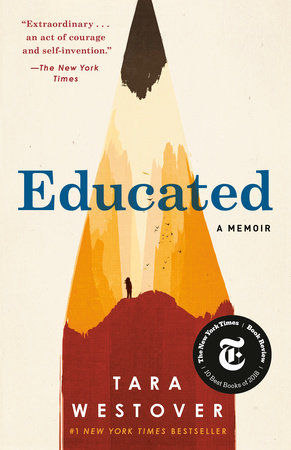
Andrea: One book I often recommend is Educated by Tara Westover. It’s a powerful story about the transformative role of education and the challenges of navigating new environments and identities while pursuing academic goals. I find it especially meaningful for students studying away from home or in a different cultural context, because it shows that the journey through education is not just academic—it’s deeply personal, sometimes uncertain, but ultimately very rewarding.
Q8: What changes do you hope to see in graduate and professional education over the next decade?
Dr. Andrea: I hope graduate and professional education becomes more critical in the best sense—encouraging students to question assumptions and not take findings for granted. Developing strong analytical thinking and intellectual curiosity is essential. I also hope programs align more closely with labor market needs, through stronger collaboration among universities, government agencies, industry, and NGOs. Education should empower people to contribute meaningfully and productively to society. At the same time, I hope it places greater emphasis on forming better human beings— people who are more empathetic, attentive to others’ needs and contexts, and committed to making a positive impact.
Q9: What’s your favorite way to relax or recharge?
Dr. Andrea: I usually recharge by being outside, going for a jog, taking a walk, or exploring a new place. I am honestly not much into podcasts or movies; I am happiest getting out, spending time with friends, or taking a short trip nearby. I also love dancing—especially to whatever songs are popular at the moment. I also enjoy simple pleasures like a glass of wine, live music, and a good dinner —those are the perfect way to unwind.
Is Dr. Andrea the right mentor for your academic or professional journey? Request to book below!


Comments