600_edited.png)
The Metamorphosis of the Ideal Academic: Navigating Imposter Syndrome in Graduate School Life (Inspired by The Metamorphosis by Franz Kafka)

Exactly five months ago, Another Degree introduced you to Tehran-based scientist and writer Saina Bijanzadeh. Her article “The Art of Not Drowning: Preventing Assignment Overwhelm in Graduate School (Inspired by Sun Tzu’s The Art of War),” launched what was intended to be a monthly series drawing on classical literary insights and philosophy to navigate graduate school and postgraduate life. It offers practical guidance on maintaining a steady course - buttressed by strong systems and reinforcements - no matter what obstacles and assignments come one's way.
Only a few days after that article was initially published, Saina's country was plunged into literal warfare. It was the latest setback in a series of tragic and tumultuous events that disrupted her scientific work and her admissions to PhD programs. But despite an ongoing economic crisis and political and military violence, I'm thrilled to share that she has since obtained a fully funded PhD position in the UK. Congratulations, Saina!
While her success is a testament to her firm resolve and resilience, and she's by no means out of the woods yet, it also a reminds us that who gets to be a scholar or scientist, and who has easiest access to the opportunities and pathways for scientific research and training, is still heavily shaped by socio-economic and geographic factors.
Those factors also impact our identities, our internal psychology, and the social reactions and interactions that influence how we see ourselves and what we believe is possible. That's why it's so important that this article in Saina's now-continuing series of literary insights on scholarly life grapples with navigating Imposter Syndrome in graduate school - and fittingly does so through the lens of Kafka’s Gregor Samsa, who wakes one morning to find himself transformed into a giant pestilent insect (typically depicted as a roach). Samsa must learn to move about the world in a new way, and must confront what this metamorphosis means for his identity, how he relates to others in the world, and them to him.
In adapting Kafka's allegory, Saina examines how academia’s elite, idealized culture compels competition, comparison, and personal transformation, often toward an impossible, imagined ideal. Along the way, scholars risk estrangement from themselves and the abnegation that fuels imposter feelings. It’s easy to psyche oneself out or avoid academic spaces entirely, yet Saina draws on scientific research to offer guidance for overcoming the inner outsider and claiming one’s place as a producer of knowledge.
It's powerful guidance for anyone pursuing advanced education - especially first-generation, low income, or students from underrepresented or minoritized groups - who must remember that the unique dimensions of their self‑identity hold value and meaningfully advance knowledge and its applications.
You can learn more about Saina on LinkedIn, YouTube, and TikTok where she continues to document her path toward a PhD and her reflections on science, art, writing, and academic life.
Many days in an academic’s life start with the same dread. You wake up and immediately get reminded about the pile of tasks that you have to navigate through during the day. This comes with a certain uncertainty. The fear of not being the ideal version of yourself that you meant to be. That you are perhaps Hyde, hiding in the skin of Jekyll. Or overnight, you’ve been transformed into your Gregor Samsa-cockroach version. These thoughts are more common among graduate students than you might think.
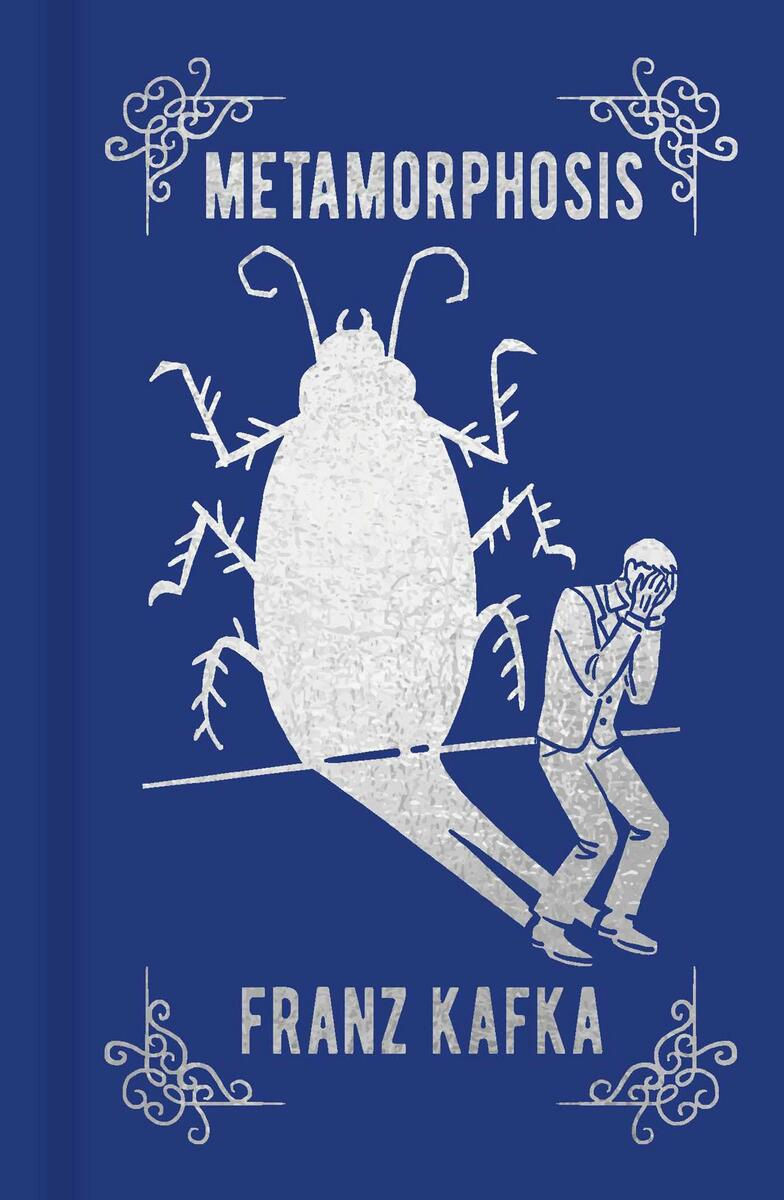
We strive all day to carve a gigantic granite statue of an ideal academic. Being the Michelangelo of ourselves. A person who we will sadly never be. Of course, we want it to happen with all our might. The first ray of sunshine brings with it all of these negative and intertangled thoughts. The good news is that we don’t have to hide like Gregor Samsa did and shy away from the academic society. We just need to manage to control ourselves and keep reminding ourselves that feeling like a newly transformed, giant cockroach in your room is more normal than you might expect.
Academia, in all of its glorified aesthetic, is mostly about trying ceaselessly. It means reading through the night with a candle burning beside you on the table and a classical playlist playing on Spotify. It is a failed recurring attempt to be the ideal version of yourself. The one who is always way ahead on their assignments. Who is perhaps a little bit over-prepared. We sometimes even falsely worship the idea of studying till death takes us apart from our notes and fountain pens.
All things considered, academia is all about striving to make a better version of yourself. An extremely knowledgeable person and an overly prepared student. We want to be the student who is handling everything like an Olympic-racing marathon champion.
This, in itself, creates a craving to learn more. Lift us from our haze and help us carry on. But, as an academic myself, I know that this rarely happens the way we imagine it to happen. It almost always ends the same way. The person feels underprepared and afraid, hiding like Gregor Samsa from their family in order not to meet their expectant gaze. We carve a fine statue of what we want to be, and this creates a vicious cycle of fear and imposter syndrome. When you look in the mirror, and all you can see is a big cockroach rolling on its back, unable to move its legs or feet. It is hard to confront this image alone.
This broken cycle has to end somehow. You have to face it, like it or not. The ideal version of an academic is more like a myth. It is not real. Moreover, it is not attainable. It belongs to the realm of dreams and broken hopes. Yes, it is there, so you don’t forget your path and what you’re striving to be. But it shouldn’t turn itself into the phantom you struggle to banish. Served only to instill fear and doubt in you.
Almost everyone in graduate school is fighting the same enemy. Even your professors, who may seem invincible, are highly prone to having imposter syndrome themselves. The fear of not being enough can turn even a respectable professor into their own version of Gregor Samsa.
So, what is the plan? How can we survive this and thrive despite it, while it tries its best to instill fear and doubt in us? The solution may seem quite simple, but it is proven scientifically to be correct.
First, we need to dissect the cockroach in the room. Science tells us that imposter syndrome is strongly linked to cognitive distortions like “externalizing success” and “internalizing failure”. In simple words, the two most recurring sentences in our brain are “It was luck!” and “I’m incompetent!”. In other words, you are not “lacking confidence”; your brain is misattributing causality and reinforcing error-based prediction loops [1].
Here we briefly go over some of the scientifically-proven methods.
1. Attribution Retraining
One proven technique is Attribution retraining. The protocol is simple to follow. After success, write three internal causes like skill, preparation, and decision-making. And in retrospect, after a failure, write three more external or modifiable causes, such as method, timing, and constraints. This directly focuses on what research identifies as the core distortion in the impostor phenomenon [2].
Now, you may ask why it works. The answer is quite simple. This protocol recalibrates the prefrontal cortex (which is involved in evaluation) and the default mode network or self-referential thinking. That is how you can retrain your brain.
2. Mindfulness
Another thing you can try is mindfulness. Research proves that mindfulness can result in a decrease in the feelings that are usually associated with imposter syndrome [3]. More broadly, mindfulness reduces rumination [1]. This is a key mediator of imposter syndrome and improves emotional regulation via measurable brain changes.
Physiologically, mindfulness affects:
Insula ⮕ Body awareness
Anterior cingulate cortex ⮕ Emotional regulation
Amygdala ⮕ Threat response
It literally reduces the physiological stress signals your brain misinterprets as “I’m not good enough”.
One other proven technique is “Interoceptive Grounding”. Unlike generic meditation, this is targeted. It focuses on heartbeat or breath and labels sensations naturally like “tightness” or “warmth”. In other words, this trains your brain to label sensations as “data”, not “evidence”. This interrupts the broken loop of stress ⮕ misinterpretation ⮕ imposter thoughts.
3. Evidence Exposure
A systematic review found that structured interventions (especially group-based or educational) reduce imposter syndrome. Another one confirms that awareness, combined with discussion, reduces severity, and normalization is the key mechanism [4,5].
Imposter syndrome thrives in information asymmetry and silent comparison. When you’re exposed to the others’ struggles, the brain updates its model, “This is not unique to me” translates to “This is not evidence of incompetence”.
For this, you can try “Evidence Exposure”. In this method, you have to collect objective performance indicators such as accepted papers, grades, and supervisor feedback. Then compare them against actual criteria, not feelings.
4. Behavioral Exposure
Science suggests that avoidance is a fuel for imposter syndrome. It shows itself in avoiding visibility, avoiding speaking, and as a result avoiding risk. Exposure-based approaches help reduce this loop.
You can deliberately do one or more uncomfortable academic behaviors like asking a question, sharing an idea, or even submitting an early draft. In this way, you generate a prediction error. If you expose yourself and nothing happens, your brain updates itself and decreases the threat signal.
5. Build Resilience
A study found that higher resilience correlates with lower imposter syndrome. Resilience is tied to lower baseline cortisol and better stress recovery [6]. To increase it, there are several proven approaches, such as:
Consistent sleep (7-9 hrs) ⮕ Regulates emotional processing
Aerobic exercise (3x/week) ⮕Improves stress tolerance and cognitive control
Social support ⮕ Buffers stress response
You have to keep in mind that these are not wellness tips. These directly affect neuroendocrine systems tied to self-perception.
Overall, you have to always remember that Imposter Syndrome is not just psychological; it is a miscalibrated prediction system reinforced by academic environments.
Turning yourself from a cockroach-like Gregor Samsa back to your normal self is not an easy task. It requires an always alert mind to recognize the patterns and deliberately avoid them or retrain your brain. There is no overnight magical solution for experiencing Imposter Syndrome. But with enough alertness and constant work, everyone can turn themselves upright and reverse this metamorphosis slowly but surely.

References:
[1] Cheung, J. O. H., & Cheng, C. (2024). Cognitive-behavioral mechanisms underlying impostor phenomenon and depressive symptoms: A cross-cultural analysis. Personality and Individual Differences, 227, 112716.
[2] Bravata, D. M., Watts, S. A., Keefer, A. L., Madhusudhan, D. K., Taylor, K. T., Clark, D. M., ... & Hagg, H. K. (2020). Prevalence, predictors, and treatment of impostor syndrome: a systematic review. Journal of general internal medicine, 35(4), 1252-1275.
[3] Tanrıöver, Ö., Gemici, E., Arısın, K., Hıdıroğlu, S., Arısın, H. B., Kılıç, A. S., & Ay, P. (2025). Exploring the association between mindfulness and imposter syndrome in medical students: a cross-sectional study. BMC Medical Education, 25(1), 1191.
[4] Hsu, C. L., Liu, C. H., Huang, C. C., Chen, H. L., Chiu, Y. L., & Yang, C. W. (2024). The effectiveness of online educational interventions on impostor syndrome and burnout among medical trainees: a systematic review. BMC medical education, 24(1), 1349.
[5] Siddiqui, Z. K., Church, H. R., Jayasuriya, R., Boddice, T., & Tomlinson, J. (2024). Educational interventions for imposter phenomenon in healthcare: a scoping review. BMC Medical Education, 24(1), 43.
[6] Kristoffersson, E., Boman, J., & Bitar, A. (2024). Impostor phenomenon and its association with resilience in medical education–a questionnaire study among Swedish medical students. BMC medical education, 24(1), 782.


Comments